You have successfully logged out.


About ECSA 2026
Surgical and trauma wounds represent a substantial and growing clinical and health‑system burden across the Asia Pacific (APAC) region. This trend is driven by high surgical volumes, rising rates of trauma from road traffic and occupational injuries, and significant variability in healthcare resources and system maturity. As a result, effective wound management is central to optimizing patient outcomes in APAC, directly influencing healing times, complication rates, and overall healthcare utilization.
Despite advancements in surgical techniques and peri‑operative care, wound related complications such as surgical site infections (SSIs), delayed healing, and wound dehiscence remain prevalent, particularly in high volume surgical and trauma settings. Variability in adherence to evidence‑based practices, resource constraints, and diverse patient risk profiles continue to contribute to these challenges across APAC health systems (Mengistu et al.,2023; World Health Organization [WHO], 2018). Consequently, effective wound care in the region requires more than technical proficiency, it demands population specific, system aware strategies that address patient vulnerabilities across the life course (Ling et al., 2019).
From a clinical standpoint, several population groups warrant particular attention due to their heightened susceptibility to wound complications. Children and adolescents undergoing surgical or trauma care require age‑appropriate assessment, analgesia, and wound management approaches, as physiological differences and reliance on caregivers may influence healing and adherence. Women, especially those undergoing abdominal, obstetric, or gynaecological procedures, face procedure‑specific SSI risks where consistent peri‑operative wound care and antimicrobial stewardship are essential. Working‑age adults account for the greatest burden of traumatic wounds arising from road traffic and occupational injuries, underscoring the importance of timely surgical intervention and structured post‑operative wound care to reduce infection, long‑term disability, and work absenteeism (Bagaria et al., 2024). Older adults are at particularly high risk of impaired wound healing due to frailty, diabetes, vascular disease, and polypharmacy, all of which are well‑established contributors to adverse surgical outcomes (WHO, 2018; Mengistu et al., 2023).
Optimizing surgical and trauma wound management across APAC therefore necessitates a risk‑stratified, evidence‑based approach that integrates standardized prevention measures with patient‑centred wound assessment and continuity of care across acute, post‑acute, and outpatient settings.
- Registration Opens: 24 March 2026
- Abstract Submission Deadline: 1 September 2026
- Finalist Notification: October 2026
- Grand Final: 28 November 2026
- Award: Up to 3,000 EUR
Award Panel
The Award Panel consists of respected professionals with extensive experience in clinical practice and research, ensuring a thorough and objective review of all submissions.
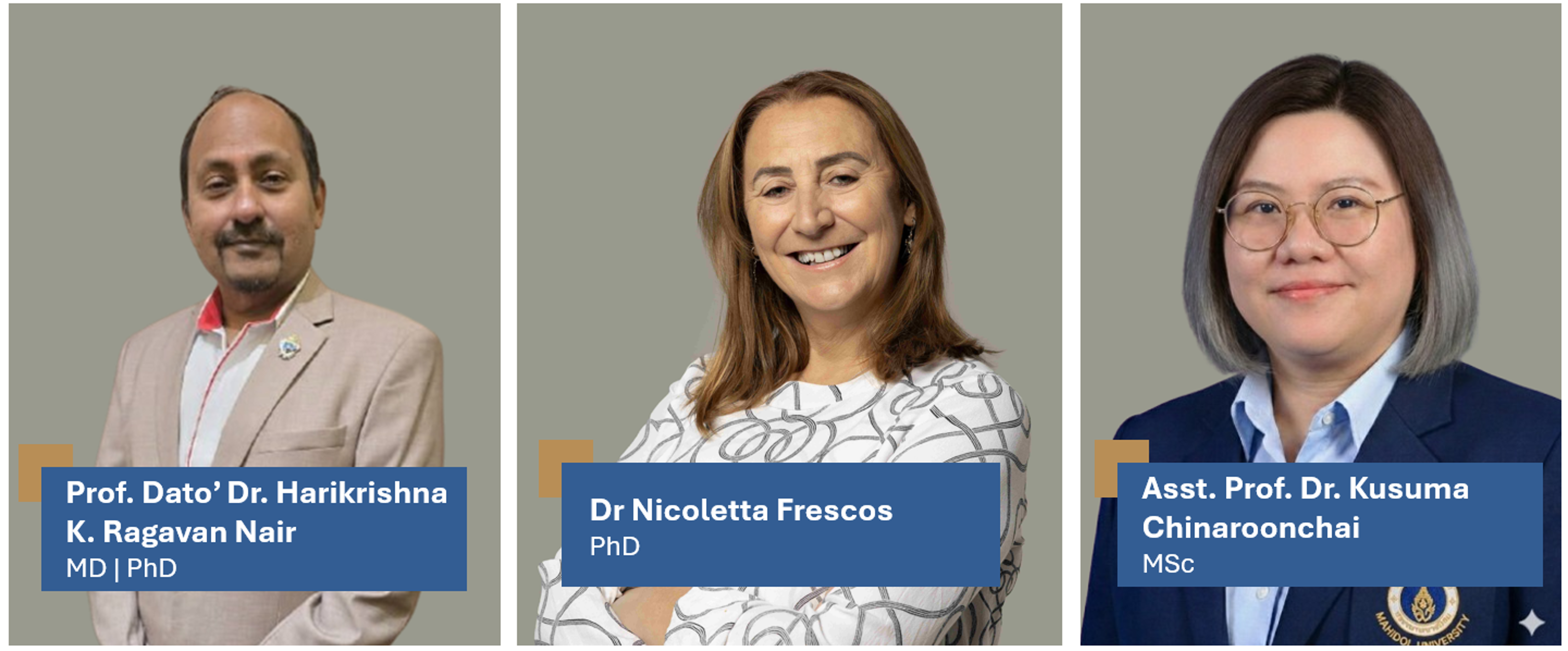
Prof. Dato’ Dr. Harikrishna K. Ragavan Nair is an internationally recognised leader in wound management with more than 25 years of clinical, academic, and organisational leadership in advancing wound care practices across Asia Pacific and globally. He currently serves as the Director of Kuala Lumpur Hospital (HKL), Malaysia’s largest tertiary hospital, and is the President of the World Union of Wound Healing Societies (WUWHS), the highest global authority in wound care. He is also the Founder and President of the Malaysian Society of Wound Care Professionals (MSWCP), which has become Malaysia’s leading platform for wound care education, multidisciplinary collaboration, and clinical excellence. A pioneer in modern wound care, Prof. Dato’ Dr. Harikrishna established Malaysia’s first specialised Wound Care Unit and the country’s first Diabetic Foot Care Unit, now managing more than 25,000 complex wound cases annually. , Prof. Dato’ Dr. Harikrishna additionally serves as National Advisor for Primary Health (MOH Malaysia) and Professor at the Institute of Health Management, Vienna, contributing to health system strategy, policy development, and workforce capability‑building. He holds senior and influential roles across global and regional organisations, including:
- President, D‑FOOT International
- President, Asian Wound Care Association (AWCA)
- Chairman, ASEAN Wound Council
- Chairman, Commonwealth Wound Care Resource Alliance
- Director for Asia, International Skin Tear Advisory Panel
- Vice Director, Asian Academy of Wound Technology
- Chair, International Committee on Education (WUWHS)
- Board Member, International Wound Infection Institute IWII
- Board Member, International partner Organisation EWMA
- Editor in Chief, Malaysian Journal of Medical Research
- Editor in Chief, Global Wound Care Journal
Prof. Dato’ Dr. Harikrishna has been instrumental in driving wound care capacity‑building across Asia Pacific, having chaired and organised more than 20 major regional and international wound conferences, and fostering collaborations with Wounds Canada, Wounds Australia, the New Zealand Wound Care Society, and other global partners. A prolific academic and researcher, his contributions include:
- 160+ peer‑reviewed journal publications,
- Over 20 books and national clinical guidelines, including multiple editions of The Compendium of Wound Care Dressings in Malaysia,
- Participation in international clinical trials, consensus documents, and groundbreaking work in biotherapy.
His work has received global recognition, including the prestigious WHO Dr. Lee Jong‑Wook Memorial Award for Public Health, acknowledging his impact on advancing biotherapy and modern wound care practices. Prof. Dato’ Dr. Harikrishna continues to shape the future of wound management through high‑level research, education, and global leadership bringing unparalleled expertise to the ECSA judging panel.
Dr. Nicoletta Frescos is a highly respected podiatrist, clinical researcher, and wound‑care leader with more than 30 years of experience dedicated to advancing diabetic foot care and chronic wound management. She currently serves as the Allied Health Research Lead at the Northern Centre for Health Education and Research (Northern Health & La Trobe University), where she supports multidisciplinary research capacity and leads major clinical projects in wound care. She also practices clinically in the High‑Risk Foot Clinic, managing complex diabetic foot wounds and chronic lower‑limb conditions.
A credentialed Advanced Wound Professional and Fellow of Wounds Australia, Dr. Frescos is widely recognised for her contributions to education, clinical excellence, and wound‑care policy. She has held long‑standing academic appointments as a lecturer and senior lecturer at multiple universities, and for over a decade has volunteered across the Pacific region including Fiji, Nauru, Solomon Islands, Vanuatu, and others to strengthen local capacity in diabetic foot prevention, wound assessment, offloading techniques, and interdisciplinary care.
Dr. Frescos holds prominent leadership roles across influential regional and global wound‑care organisations, including:
- Chair, Australian Wound and Skin Alliance
- Vice President‑Elect, Asia Pacific Association for Diabetic Limb Problems
- Scientific Committee Member, World Union of Wound Healing Societies (WUWHS) 2026 Congress
- Country Liaison Representative for Australia, WUWHS (2025–current)
- Australian Representative, Commonwealth Wound Care Alliance
- Editorial Board Member, International Wound Journal and Journal of Wound Management
- Associate Editor, Wound Practice and Research
She is also a recognised authority in guideline development, having contributed to the 2023 International Working Group on the Diabetic Foot (IWGDF) recommendations, and to the International Pressure Ulcer Guidelines (2014 & 2025). Her advisory history spans the Department of Veterans’ Affairs, Medical Device Partnering Program, and multiple national research and education committees.
A sought‑after speaker, Dr. Frescos has delivered more than 100 national and international presentations. Her areas of expertise include diabetic foot disease, wound‑related pain, wound hygiene, debridement science, biofilm management, and interdisciplinary care models.
Dr. Frescos is an accomplished researcher with over 25 peer‑reviewed publications, covering diabetic foot disease burden, wound pain mechanisms, debridement research, health‑service utilisation, and psychosocial impacts of wound‑related disorders. She has also authored book chapters in “Wound Care Made Easy” and “Disaster Wound Management” and contributed to consensus documents including the APAC autolytic debridement and biofilm management guideline (2024).
Through her extensive clinical, academic, and global advocacy work, Dr. Frescos continues to shape wound‑care practice and policy across the region. Her deep expertise in pain management, diabetic foot disease, evidence‑based wound management, and interdisciplinary education brings significant value to the ECSA 2026 expert panel.
Asst. Prof. Dr. Kusuma Chinaroonchai is a leading trauma, burn, and wound‑care surgeon based at Siriraj Hospital, Mahidol University, Thailand’s oldest and most prestigious medical school. She currently serves as Lecturer, Attending Physician, Instructor, and Head of the Hyperbaric Oxygen Therapy (HBO) Clinic within the Division of Trauma and Burn Surgery. Her clinical work spans major trauma, burn surgery, chronic wound management, reconstructive surgery, and advanced wound‑healing technologies. Dr. Kusuma completed her medical degree with first‑class honors, followed by board certifications in General Surgery and Trauma Surgery. Her advanced training includes fellowships and visiting scholar experiences in leading centres across the United States (Harborview Medical Center, University of Washington; Oregon Health Science University), Germany (EWMA/ICW), Korea, and Malaysia, strengthening her expertise in burn care, trauma surgery, wound debridement, and modern wound‑healing science. She has made substantial contributions to Thailand’s national wound and burn‑care policy. Dr. Kusuma serves on multiple national advisory boards, including:
- Thailand Diabetic Foot Guideline
- Thailand Burn Guideline Committee (2020–present)
- Training Committee, Trauma Surgery Board of the Royal College of Surgeons of
Thailand - Subcommittee on Non‑Technical Skills for Surgeons, Siriraj Hospital
Regionally and globally, she holds prominent leadership roles that reflect her growing influence in wound‑care and surgical education:
- Chair, Congress Venue & Scientific Committee for ICS Pacific Federation
Congress 2026. - Board of Directors, Burn and Wound Association of Thailand (BWAT)
- Course Director, Thailand DFU Academy “Speak the Common Language” (BWAT)
- Committee Member, Supporting Society of the World Union of Wound Healing Societies (WUWHS) – 2025 onward
- Treasurer & Board of Directors, International College of Surgeons (ICS), Thailand Section
- Administrative Board Member, Royal College of Surgeons of Thailand (2025–2027)
Dr. Kusuma is also recognised internationally as an ICW‑certified wound instructor under the Initiative Chronische Wunden and the European Wound Management Association (EWMA). She has been actively involved in ATLS and ACLS instruction, HBO therapy program leadership, diabetic foot care training, and national surgical curriculum development. An accomplished researcher, Dr. Kusuma has authored more than 30 peer‑reviewed publications, including randomized controlled trials, translational wound‑healing studies, and clinical outcome investigations in burn care, diabetic foot ulcers, oxygen therapy, biomaterials, and infection control. Her work has appeared in leading journals such as the International Journal of Lower Extremity Wounds, Journal of Burn Care & Research, Siriraj Medical Journal, and International Journal of Biological Macromolecules. She has also participated as principal investigator or site investigator in major multicentre international trials. Throughout her career, Dr. Kusuma has been recognized with multiple national and international awards for clinical innovation, research excellence, and academic contribution including first‑prize awards at the Burn and Wound Healing Association of Thailand Annual Meetings, the Asian Wound Care Association Conference, and prestigious distinctions from national research organizations. With her strong foundation in trauma and burn surgery, advanced wound‑care science, HBO therapy, and regional leadership, Asst. Prof. Dr. Kusuma Chinaroonchai brings substantial clinical and academic expertise as the ECSA 2026 Expert Panel.
Publication
Discover our latest case report


Contact form
Get in touch with us
Your request could not be submitted. Please try again.
warningReferences:
- Mengistu, D. A., Alemu, A., Abdukadir, A. A., et al. (2023). Global incidence of surgical site infection: A systematic review and meta‑analysis. INQUIRY, 60, 1–11.
- World Health Organization. (2018). Global guidelines for the prevention of surgical site infection (2nd ed.). Geneva: WHO.
- Ling, M. L., Apisarnthanarak, A., Abbas, A., et al. (2019). APSIC guidelines for the prevention of surgical site infections. Antimicrobial Resistance & Infection Control, 8, 174.
- Bagaria, D., Ratnayake, A. S., Madrid, A., & Worlton, T. J. (2024). Trauma systems in Asian countries: Challenges and recommendations. Critical Care, 28(1), 47.